
Facade
Construction
Tambest provides curved, toughened and laminated glazing solutions for facade construction projects that must meet demanding architectural and structural requirements.
Our solutions are suitable for a wide range of glazed facades, exterior glass structures and heated glass elements.
Glass Solutions for
Facade Construction
Curved Glass Solutions
for Facade Construction
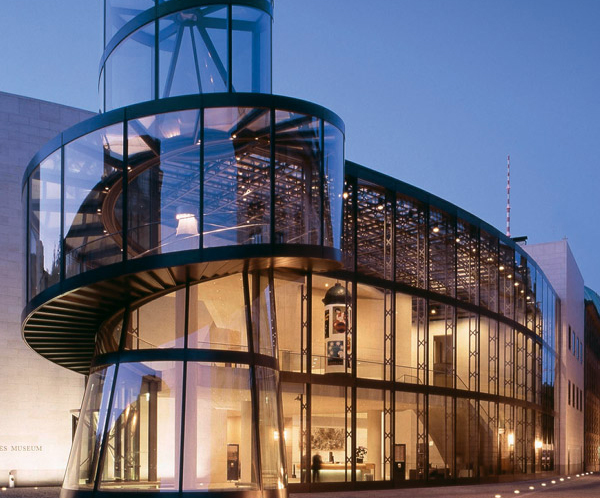
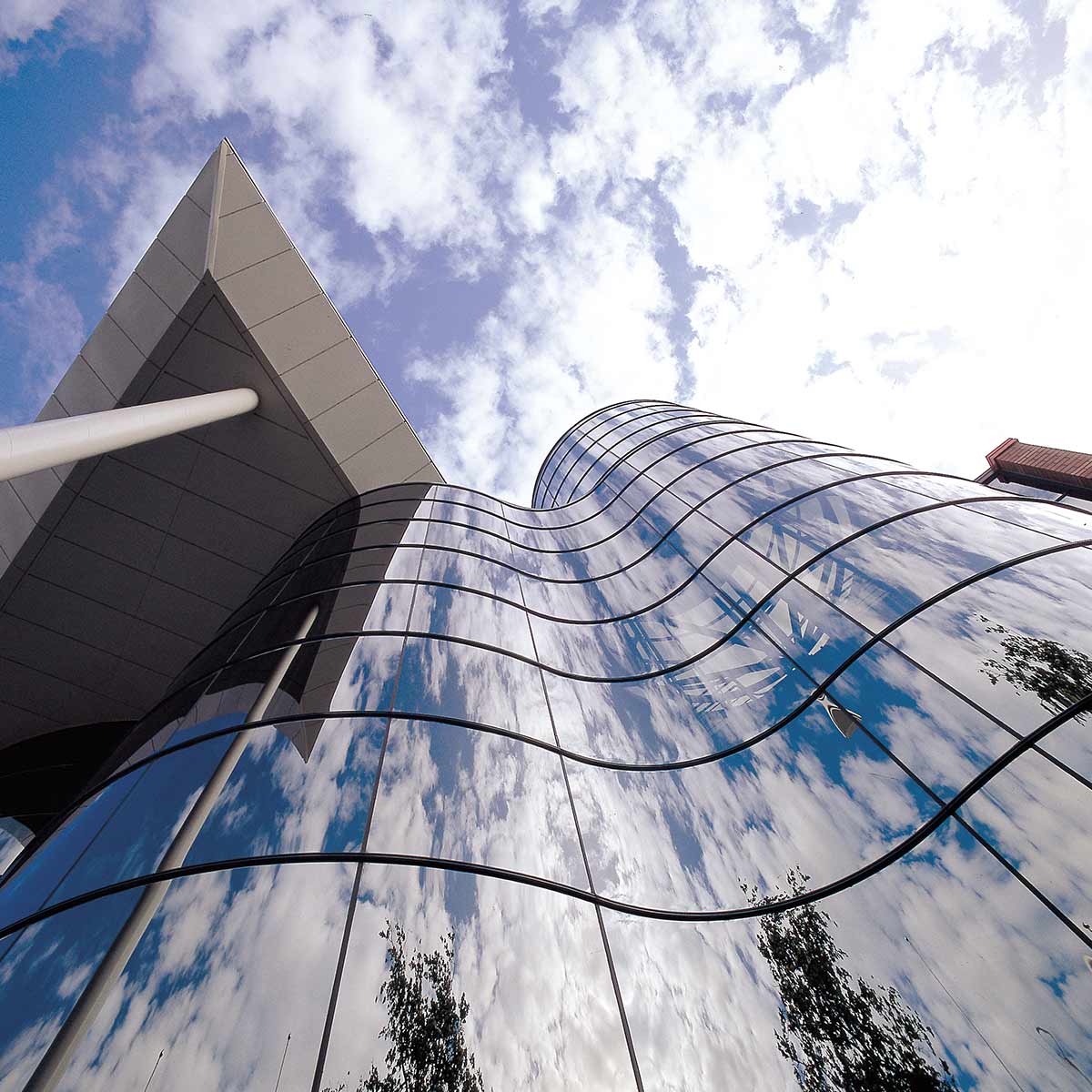
Tambest’s curved toughened, laminated and insulating glass solutions open up new possibilities for architecture, combining flowing forms, structural strength and premium optical quality.
We utilise advanced ProBend glass bending technology as well as gravity bending using moulds.
Our manufacturing methods ensure outstanding optical quality and minimise reflection distortions, even on large glass surfaces.
Structural Performance and Safety
Curved glass is not merely an aesthetic choice. Through our toughening and lamination processes, it becomes a safe and durable facade material that meets demanding structural requirements.
As a result of continuous product development, we have introduced several significant industry innovations, including bending methods for complex spherical, conical, S-shaped, elliptical, variable-radius, semi-circular, cylindrical and paraboloid glass geometries.
Glass Balustrades and Exterior Glazing
Our exterior glazing solutions are designed to withstand demanding weather conditions and structural loads while maintaining the highest safety standards.
Using advanced toughening and lamination technologies, we ensure maximum durability and operational safety in all environments, resulting in solutions that are both aesthetically refined and highly reliable.
Electrically Heated Glass
Tambest’s electrically heated glass solutions improve indoor comfort and enable the use of large glazed surfaces, even in demanding conditions. Heating reduces cold radiation and draughts, prevents condensation and allows snow and ice to be melted on glass roofs and façade glazing.
Safety and Certification
Heated glass can be manufactured as laminated glass, insulating glass, burglary-resistant glazing or ballistic-resistant glazing.
All products comply with electrical safety requirements, carry CE marking and are certified with the FI mark (SGS Fimko), ensuring high quality and operational safety.
Electrically Heated Glass Solutions for the Construction Industry
Electrically heated glass improves indoor comfort and enables the use of large glazed surfaces, even in demanding conditions. Heating can reduce cold radiation and draughts, prevent condensation and melt snow and ice accumulating on glass surfaces.
Tambest’s electrically heated glass solutions can incorporate heating technologies such as pyrolytic resistive coatings or heating elements integrated into laminated glass structures. The heating system can be integrated into a building’s technical systems or operated through a separate control system.
Roofs, Windows and Catering Applications
We manufacture electrically heated glass solutions for a wide range of applications, including roofs, windows and marine catering applications. In buildings, the heating system can be integrated into the building’s heating and environmental control systems.
Thermal Comfort and Condensation Prevention
The inner surface temperature of insulating glass units can typically be raised to 20–35 °C, reducing cold radiation and downward cold air currents near glazed surfaces. This improves indoor comfort and allows seating areas and furniture to be positioned close to large glazed surfaces.
Heating also helps prevent condensation and fogging in swimming pools, spas, conservatories and other high-humidity environments.
Pyrolytic Coating
A pyrolytic coating integrated into the surface of toughened glass acts as a resistive heating element when an electrical current is applied (AC or DC, 0–230 V). Heating power is specified per square metre according to the application, while the applied voltage controls the glass surface temperature.
The system can be equipped with a thermostat and integrated into building automation systems to provide uniform heating and prevent condensation.
Snow and Ice Melting
Electrical heating can be used to melt snow and ice accumulating on glass surfaces, such as glass roofs and façade glazing. Depending on the application, heating power is typically specified within a range of approximately 100–600 W/m².
Heating helps maintain light transmission through glazed surfaces and reduces problems caused by snow and ice accumulation.
Laminated Resistive Heating Layer
Alternatively, laminated glass can incorporate a fine metal mesh or electrically conductive coating embedded within a PVB or EVA interlayer.
Hybrid heating systems can combine a pyrolytic coating with a laminated heating layer to provide effective heating in demanding applications, such as military vehicles.
System Integration and Safety
Tambest’s electrically heated glass products are manufactured using toughened safety glass or toughened laminated safety glass. The pyrolytic coating is protected within the insulating glass unit.
Electrical connections can be discreetly integrated into the framing system, while heating can be controlled using application-specific power controllers or as part of the building’s technical systems.
TAMBEST OY
Glass Deliveries for Demanding Facade and Architectural Projects
Tambest supplies glass structures for facade construction projects to architects, contractors and system suppliers.
Our solutions are suitable for demanding facade applications, exterior glass structures and architectural projects where exceptional optical quality, structural durability and documented performance are required.
Looking for a Solution for a Demanding Application?
Tell Us About Your Requirements – Let's Design the Right Solution Together
Application-Specific Design
Solutions engineered to meet the technical requirements of each application.
Standards-Compliant Quality
Our products comply with international standards and testing requirements.
Solutions for Demanding Environments
We deliver solutions for challenging and international operating environments.